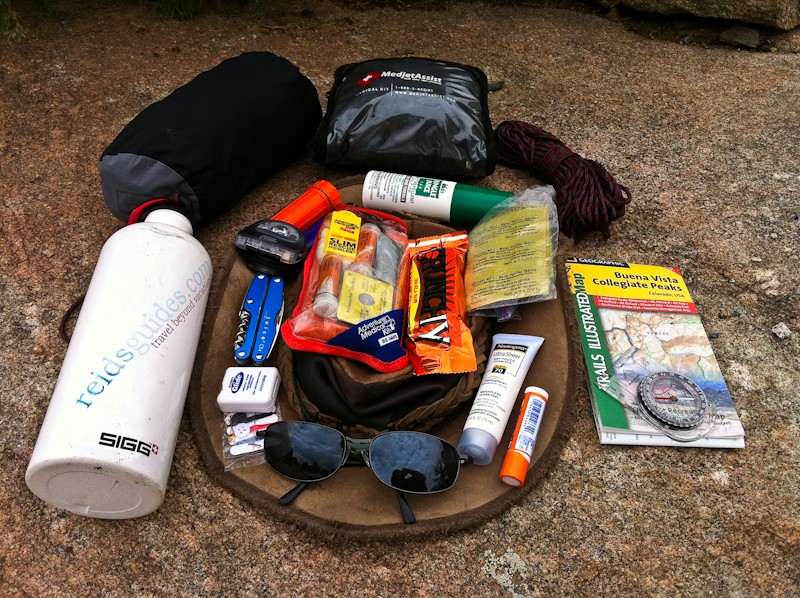
Combustion
It’s wise to carry three sources of fire: lighters are easiest, but don’t rely on them exclusively (and keep them in a plastic baggie to keep them dry); waterproof matches are handy (carry in waterproof container); a flint-and-steel type device is a good backup. Also bring along some tinder—dryer lint or a short length of frayable twine is good and easy.
Hydration
Bring at least a one liter water bottle (preferably two)—or a Camelback-style personal reservoir—as well as some method of filtering and/or sterilizing water from streams. For that, water pumps are reliable; chlorine tablets or iodine tablets are slow but effective; UV sterilizing wands are fast and nifty. The crew will always have a water filter or two on trips, but carrying our own iodine tablets is wise.
Nutrition
Always pack a bit more food than you technically need. The crew will provide food, but always have an emergency ration of your own (granola bar, energy bar, candy bar, GORP, whatever).
Navigation
Bring your own compass. GPS units are fun, but always also have a topographical trail map and compass as they don’t need batteries or satellite signals to work. And yes: it has to be an actual, physical topo map. (Note: Having the Trails.com app on your iPhone is not enough. Yes, Jon, I’m talking to you.)
Illumination
Flashlights are fine; headlamps are better (they leave your hands free). Bring spare batteries.
Tool and repair kit
A Swiss Army knife or Leatherman-like multitool is essential. Needle and thread and dental floss (a super-strong thread substitute) are very handy. Wrap a few feet of duct tape around your hiking pole or a pencil for tent-patching and pack-fixing.
First-aid kit
Self-explanatory. It’s easiest to buy a pre-made hiker’s kit from REI or any other camping supply store. The crew’s leaders will always have at least two first aid kits, but it’s wise to carry a small one of your own. I always bring at least bandages, pain relievers (including aspirin for potential heart issues), moleskin (for blisters), and Benadryl (for stings and other unexpected allergic reactions). Note: Many argue that, these days, a cellphone is one of the most important items in your first aid kit so you can call for help if needed. Problem: Much of the Great Outdoors is off the grid. (Mountaintops are best for catching stray signals.) I pack one just in case (but see the note below under “Communication”).
Insulation
Bring an extra layer of clothing. I like silk long underwear (light and small—and comfy) plus a fleece top, a warm hat, and a lightweight rain jacket (which does double duty as an insulator and… well… as a rain jacket).
Emergency shelter
Space blankets are great and pack small. Even better to bring a poncho (doubles as rain gear).
Sun protection
Bring sunscreen, sunglasses, UPF lip balm, and a hat with an all-around brim. Long pants and sleeves count, too. Use them all.
… and the top candidates for 11th essentials
Insect repellent
This is more of a comfort factor than a survival one (malarial areas aside), but bug spray and, if necessary, mosquito netting can make a buggy trip much less miserable.
Communication
It may seem antithetical to the backwoods ethos, but having a mode of communication—cellphone, two-way radio, satellite phone for isolated backcountry, even just an emergency whistle and a mirror or old CD (for signaling)—is an important survival tool. However, remember that scouts can only use their cellphones in emergencies—or to take pictures. No calling, texting, Internet, or games while on trips.
Preparation
Know what you’re doing out there. Be well-trained. Also, for each trip, know where you are going and what your plans are. Feel free to ask your SPL for details and they’ll be happy to share the information. The more people know what we’re doing and where we’re going, the less time we waste milling around aimlessly.
Positive mental attitude
The best thing you can bring on any trip—and the key to survival in truly sticky situations.